Beginner's Guide to Ordering Coffee in Italy
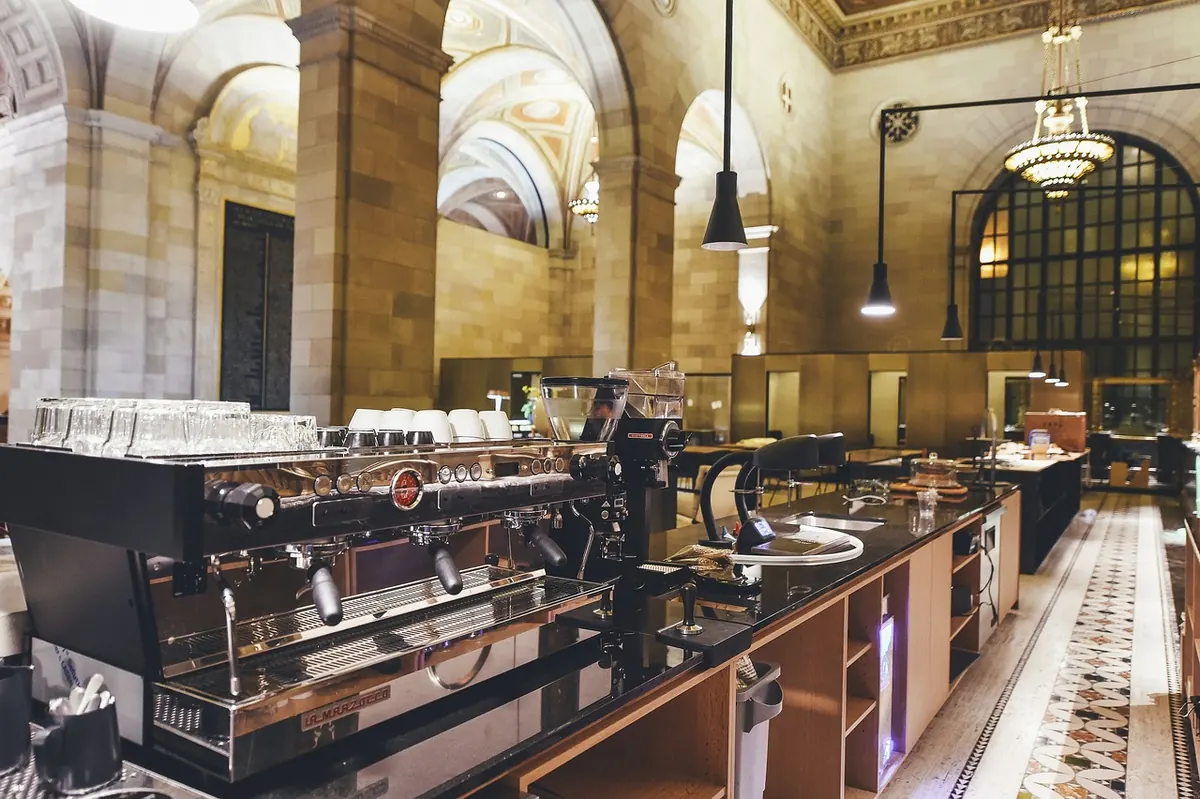
You walk into a small bar a few streets from the station, join a loose crowd of people standing at a counter, and try to work out who is being served, who has already paid, and why everyone else seems to have finished a coffee in under ninety seconds. Ordering coffee in Italy is not difficult, but it works on a set of unwritten rules that nobody hands you at the airport. Learn them once and the whole ritual becomes one of the great small pleasures of travelling here — cheap, quick, and genuinely local.
The bar is not a café
In Italy a "bar" is a coffee counter first and a bar second. The same place might serve espresso at seven in the morning, a cornetto at eight, a panino at one, and a spritz at six, all from the same counter. You will also see the word caffetteria or pasticceria; the format is similar, sometimes with more pastries and a few seats.
What it is not is a place to settle in with a laptop. Italians treat the bar as a stop, not a destination. You stand, you drink, you exchange two words with the barista, you leave. Nobody will ask you to move, but lingering over a single espresso is unusual outside big cities and student neighbourhoods. If you want to sit down and read for an hour, look for a café with table service and expect to pay for the privilege.
How to order without freezing
The sequence varies by city and by how busy the place is, so watch the room for ten seconds before you queue. In most bars in Rome, Florence and Milan you pay first at the cash register (the cassa), then take your receipt — the scontrino — to the counter and tell the barista what you want. In smaller towns and in the south, it is often the other way round: you order at the bar, drink, then pay on your way out.
Here is the sequence that works almost everywhere:
- Say buongiorno when you reach the counter. It is not optional politeness; it is the signal that you are ready.
- Order in the fewest words possible: un caffè, per favore. Save the full sentences for later.
- If you paid first, put the receipt on the counter or hold it where the barista can see it.
- Drink at the counter, unless you have chosen table service.
- Say grazie and step aside for the next person.
A useful trick: look for a menu board listing prices al banco (at the counter) and al tavolo (at the table). If there is no board and no table service, everything is at the counter and prices are low.
The drinks, decoded
The single most important translation: un caffè means espresso. It is not a filter coffee and not an American-style mug. It arrives in a small cup, roughly a mouthful and a half, and it is what most Italians drink several times a day.
Espresso variations
- Ristretto — shorter and more concentrated, less water through the same dose.
- Lungo — longer, more water, slightly softer.
- Doppio — a double. Ask for it if you need more than a sip.
- Macchiato — espresso "stained" with a drop of milk. Specify caldo (hot milk) or freddo (cold).
- Corretto — with a splash of grappa or another spirit. A cold-morning drink.
- Con panna — topped with whipped cream.
- Al vetro — served in a glass rather than a cup, smaller and quicker to cool.
- Shakerato — espresso shaken with ice and sugar, the summer order.
Milk drinks
A cappuccino here is a modest cup, not a bucket: espresso, hot milk, foam, often dusted with cocoa. A caffè latte is mostly milk with coffee in it, usually served in a tall glass, and is a breakfast drink. A latte macchiato flips the proportions — lots of milk, espresso poured through it. Order a plain latte and you may get a glass of milk, which is a fair outcome and a common tourist story.
You will also meet the marocchino (espresso, cocoa, milk foam, a Turin and Milan specialty), the affogato (vanilla ice cream drowned in espresso, technically a dessert), and the americano, which is espresso diluted with hot water and is a perfectly respectable order. In specialty coffee shops, flat whites and filter coffee now exist too, at specialty prices.
Standing, sitting and what it costs
This is the part that catches people out. Standing at the counter is the default and the cheapest option. Sitting at a table means table service, which is a different transaction with a different price, and in some places a cover or service charge on top.
The gap can be striking. A coffee at the counter in an ordinary neighbourhood bar is often around a euro or a little more; the same coffee at a table in a historic square, or in a city like Venice near the main sights, can cost several times that. This is not a scam. You are paying for the seat, the waiter, the view and the time you occupy. Ask before you sit if the menu is not on display: quanto costa al tavolo? is a perfectly normal question.
A few practical notes. If you order at the counter and then carry your cup to a table, you may be asked to move or charged the table price. If you sit, a waiter will take your order and you pay at the end. Tap water is not automatically brought with coffee; ask for un bicchiere d'acqua if you want one, and expect a small bottle if it is fizzy.
Timing, milk and the cappuccino question
Italians drink milk-heavy coffee at breakfast, usually with a cornetto, and switch to espresso for the rest of the day. Ordering a cappuccino after a plate of pasta at two in the afternoon or after dinner will not cause offence and nobody will refuse you, but it does mark you as a visitor. Many Italians also avoid milk after a large meal simply because it sits heavily on the stomach — a habit rather than a rule.
Timing matters in other ways. Between about seven-thirty and nine-thirty the bar is at its busiest: commuters, students, a wall of voices, baristas working three machines at once. Have your order ready, know what you want to pay with, and do not start a conversation about the weather. After lunch, the same bar is nearly empty and the barista is happy to talk.
Small habits that make you welcome
- Greet on arrival. Buongiorno before nine, buonasera after.
- Do not ask for a takeaway cup unless you see locals doing it. Espresso is made to be drunk on the spot.
- Tipping is not expected. Leaving the small change or rounding up is generous and enough.
- Keep your receipt. It is a legal requirement for the bar to issue one, and carrying it out is normal.
- Do not snap your fingers or wave notes to get attention. Catch the barista's eye and wait your turn.
- Drink the water, if offered, before or after — not as a chaser you sip slowly for ten minutes.
Your first morning, in six steps
Walk into a bar that has people standing at the counter rather than an empty room. Say buongiorno. Pay at the cassa if there is one, and take the receipt to the bar. Order un caffè and, if you are hungry, un cornetto — plain, or con la crema if you want it filled. Drink it standing, in two sips, the way everyone around you is doing. Leave a coin if the coffee was good, say grazie, and walk out into the morning. That is the whole ritual, and by the second day it will feel like yours.
Photo: StockSnap / Pixabay